最近的
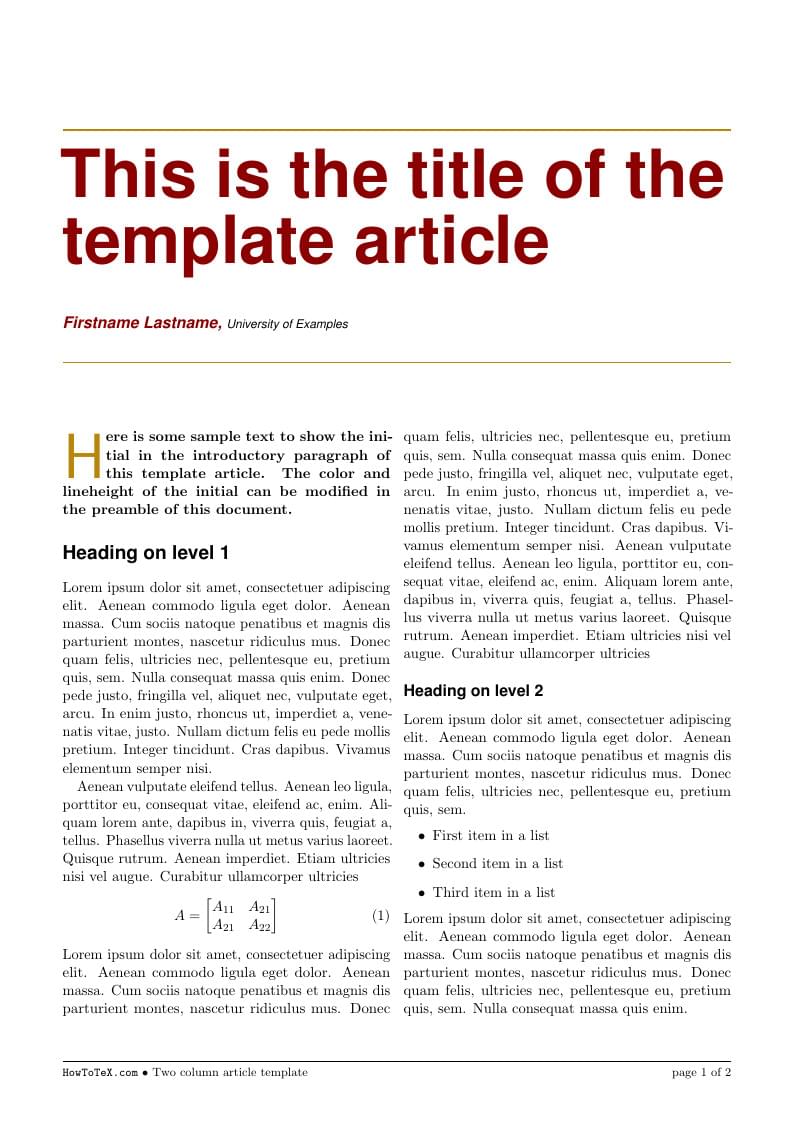
Two-column article template with coloured title and initial capital at the beginning of the paragraph. This template was created by Frits Wenneker. This template was originally published on ShareLaTeX and subsequently moved to Overleaf in October 2019.
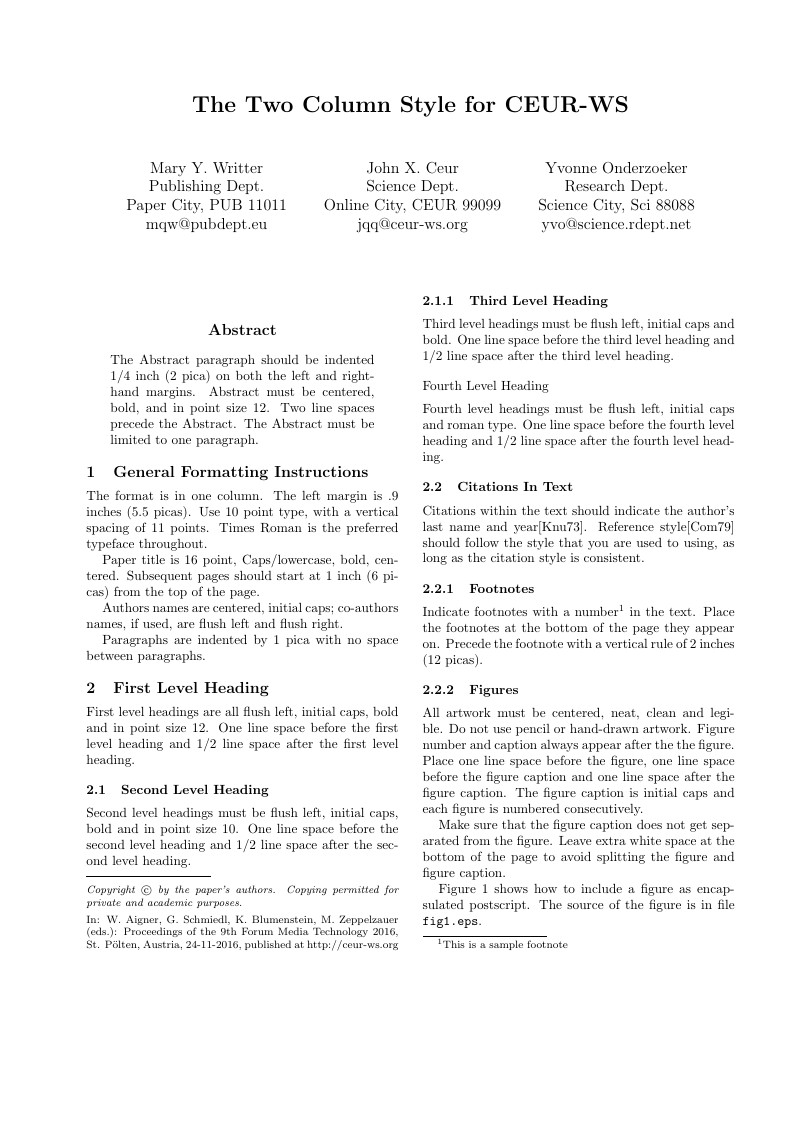
Template for the 9th Forum Media Technology at St. Poelten University of Applied Sciences. Adapted from "The Two Column Style for CEUR-WS".
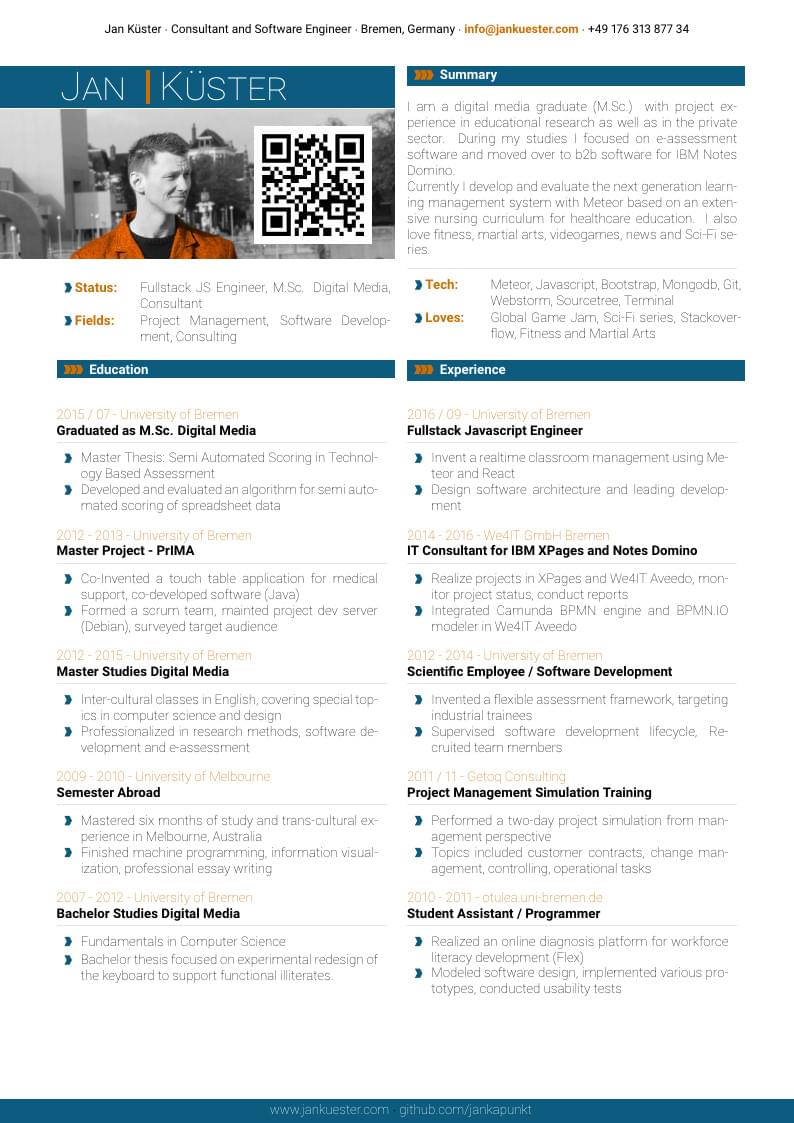
A one-sided CV template with two columns, taken from https://github.com/jankapunkt/latexcv
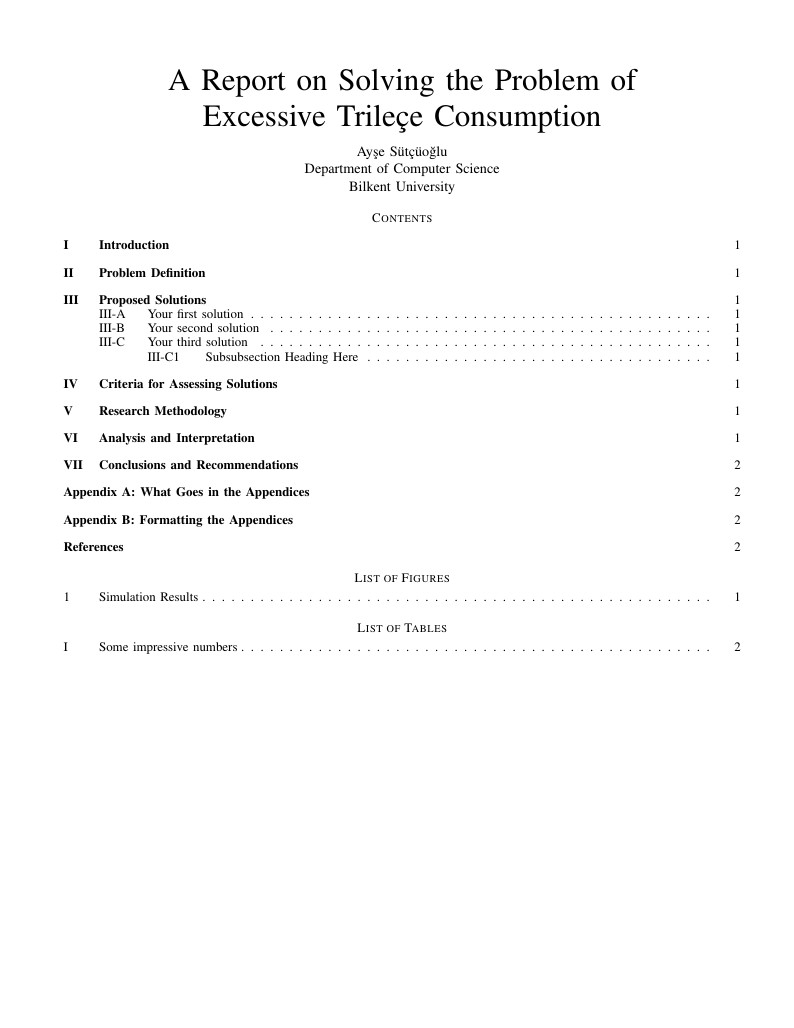
I prepared this template for my technical report writing class at Bilkent University. It is based on the IEEE peer review class.
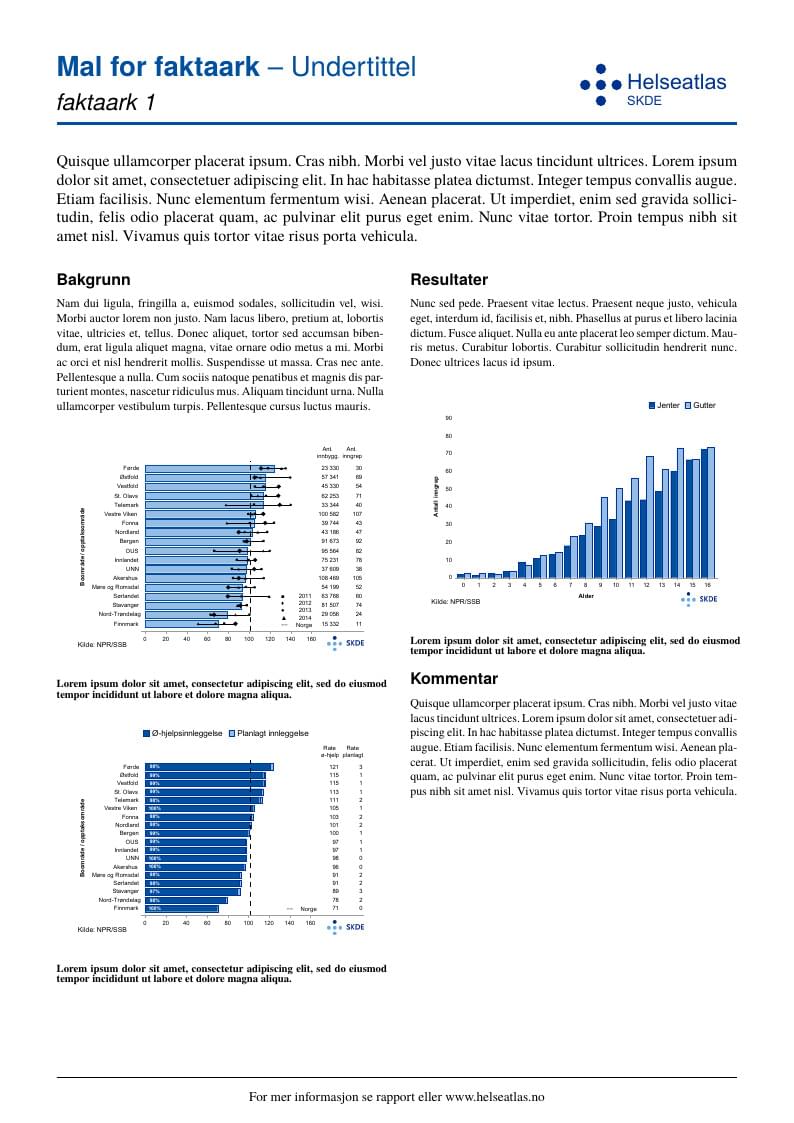
Template for 'Helseatlas' fact sheets, for SKDE Can be both one-page and two-page fact sheets Jan. 29 2019: Simplified setup Sept. 21 2018: New framework (all fact sheets in one document) Apr. 10 2017: LuaLaTeX and TeX Gyre fonts
A simple template for college projets or reports
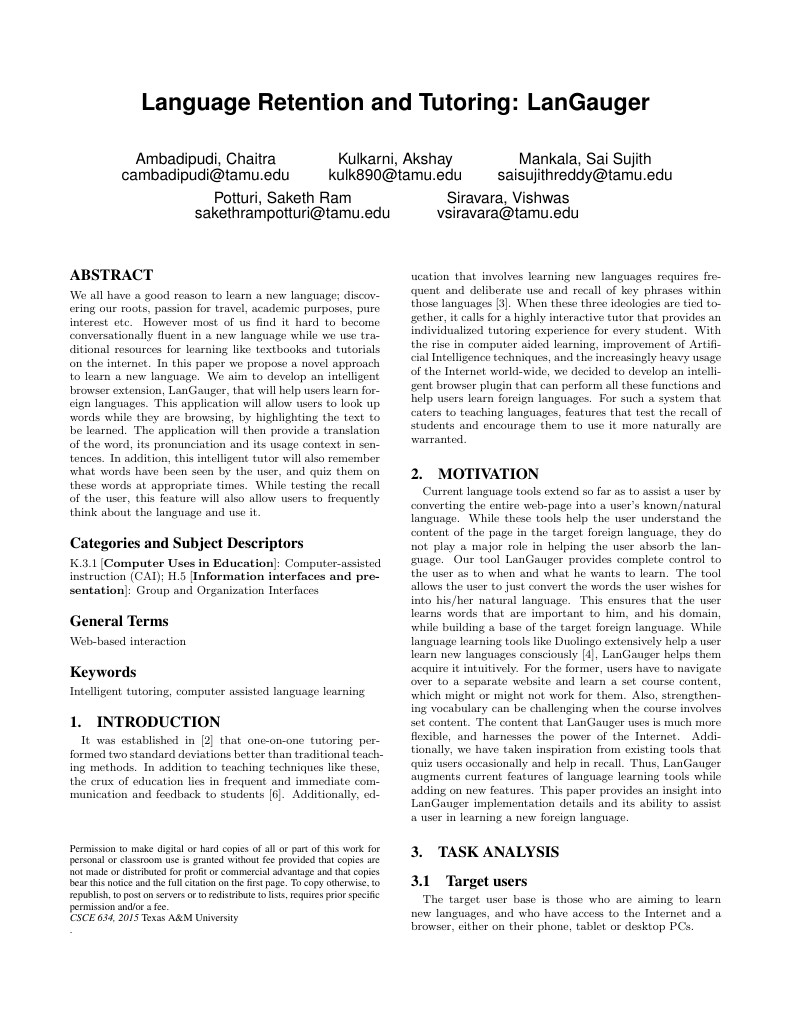
We all have a good reason to learn a new language; discovering our roots, passion for travel, academic purposes, pure interest etc. However most of us find it hard to become conversationally fluent in a new language while we use traditional resources for learning like textbooks and tutorials on the internet. In this paper we propose a novel approach to learn a new language. We aim to develop an intelligent browser extension, LanGauger, that will help users learn foreign languages. This application will allow users to look up words while they are browsing, by highlighting the text to be learned. The application will then provide a translation of the word, its pronunciation and its usage context in sentences. In addition, this intelligent tutor will also remember what words have been seen by the user, and quiz them on these words at appropriate times. While testing the recall of the user, this feature will also allow users to frequently think about the language and use it.
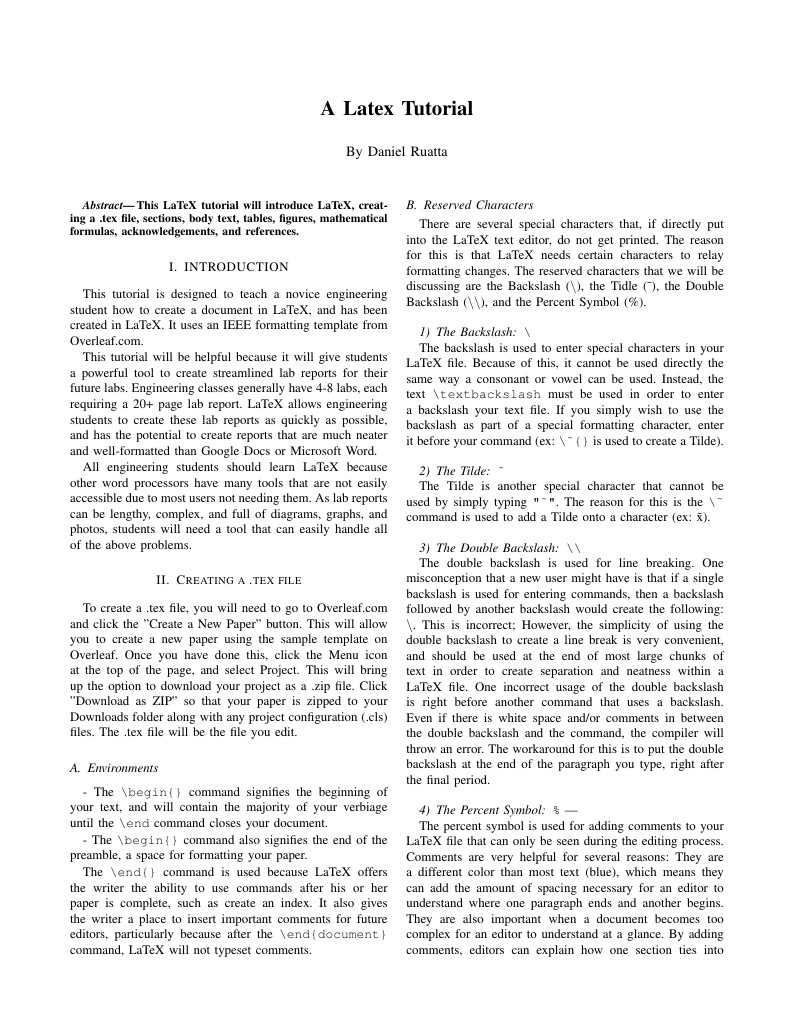
This LaTeX tutorial will introduce LaTeX, creating a .tex file, sections, body text, tables, figures, mathematical formulas, acknowledgements, and references.
Cet article étudie deux méthodes utilisées dans le cadre du transport humanitaire en cas de crise (désastre, épidémie...). Le Covering Tour Problem se focalise sur l'équité de distribution des vivres, alors que le Capacitated Vehicle Routing Problem se concentre sur l'urgence de la distribution. Nous proposons une nouvelle approche mélangeant ces deux approches pour former une solution à la fois équitable et rapide. Ce article a été rédigé dans le cadre du TER 2014-2015.